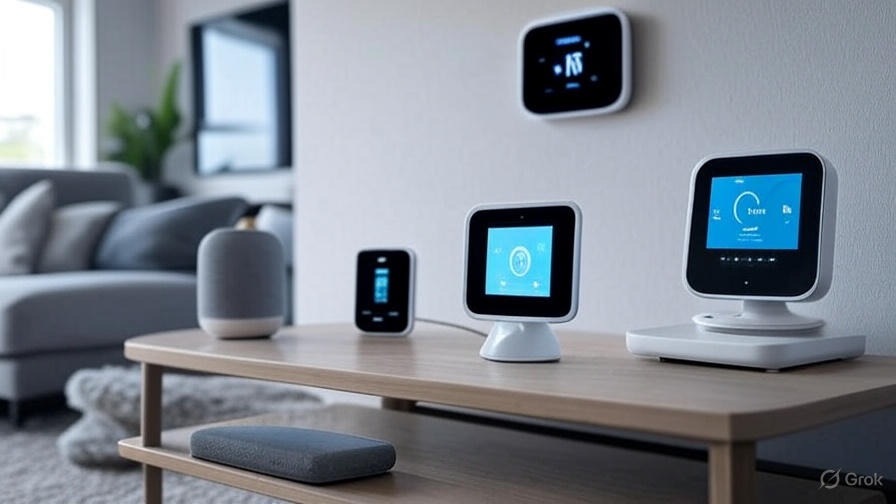
The Complete Guide to Internet of Things (IoT): Transforming Our Connected World
Have you ever wondered what it would be like if your coffee maker could talk to your alarm clock? Or if your car could automatically schedule its own maintenance? Welcome to the fascinating world of the Internet of Things (IoT), where everyday objects become smart, connected, and incredibly useful.
The Internet of Things isn’t just another tech buzzword – it’s a revolutionary concept that’s quietly transforming how we live, work, and interact with the world around us. From the smart thermostat in your home to the sensors monitoring crop health in vast agricultural fields, IoT is weaving an invisible web of connectivity that’s making our world more efficient, responsive, and intelligent.
What is the Internet of Things (IoT)?
Defining IoT in Simple Terms
Think of IoT as giving a voice to objects that were previously silent. At its core, the Internet of Things refers to a vast network of physical devices – from tiny sensors to massive industrial machines – that are embedded with technology to collect, share, and act on data without requiring human intervention.
Imagine your refrigerator knowing when you’re running low on milk and automatically adding it to your shopping list. Or picture a manufacturing plant where machines can predict when they need maintenance before they actually break down. That’s the magic of IoT – turning ordinary objects into extraordinary problem-solvers.
The beauty of IoT lies in its simplicity and complexity working together. While the concept is easy to understand, the underlying technology creates a sophisticated ecosystem where devices communicate, learn, and make decisions that can improve efficiency, reduce costs, and enhance our quality of life.
Key Components of IoT Systems
Every IoT system is built on four fundamental pillars. First, we have sensors and actuators – the eyes, ears, and hands of IoT devices. These components collect data from the environment and can take physical actions based on that information.
Second, connectivity forms the nervous system of IoT, enabling devices to communicate through various protocols like Wi-Fi, Bluetooth, cellular networks, or specialized IoT protocols. Without connectivity, IoT devices would be like isolated islands with no way to share their valuable insights.
Third, data processing and analytics serve as the brain of the operation. This is where raw sensor data transforms into actionable intelligence. Whether processing happens locally on the device (edge computing) or in remote servers (cloud computing), this step turns data into decisions.
Finally, user interfaces provide the human touchpoint, allowing us to interact with, monitor, and control our IoT systems through smartphones, tablets, web dashboards, or even voice commands.
The Evolution of IoT Technology
From Machine-to-Machine Communication to Smart Everything
The journey to today’s IoT landscape didn’t happen overnight. It began in the 1980s with simple machine-to-machine (M2M) communications, where devices could share basic information over networks. Think of early vending machines that could report when they were running low on products.
The real breakthrough came with the widespread adoption of the internet in the 1990s, followed by the smartphone revolution in the 2000s. Suddenly, we had the infrastructure and user interfaces needed to make IoT practical and accessible to everyone, not just industrial engineers.
Today’s IoT ecosystem is incredibly diverse, spanning from fitness trackers that monitor your heart rate to smart city infrastructures that manage traffic flow across entire metropolitan areas. This evolution represents a shift from simple data transmission to complex, intelligent systems that can learn, adapt, and optimize themselves.
Major Milestones in IoT Development
Several key moments shaped the IoT landscape we know today. The introduction of IPv6 in the late 1990s provided enough IP addresses to connect virtually every object on Earth to the internet. The development of low-power wireless communication protocols made it feasible to embed connectivity in battery-powered devices that could operate for years without maintenance.
The smartphone boom created a generation of users comfortable with connected devices and apps, while cloud computing provided the scalable infrastructure needed to process vast amounts of IoT data. More recently, advances in artificial intelligence and machine learning have enabled IoT systems to become truly intelligent, making predictions and autonomous decisions.
How Does IoT Actually Work?
Sensors and Data Collection
Sensors are the starting point of any IoT system – they’re like the five senses for digital devices. These tiny components can detect everything from temperature and humidity to motion, light, sound, and chemical compositions. Modern sensors are incredibly sophisticated, capable of measuring multiple parameters simultaneously while consuming minimal power.
What makes IoT sensors special is their ability to convert physical phenomena into digital data that can be transmitted and processed. A simple temperature sensor in a smart thermostat doesn’t just measure heat – it creates a continuous stream of data that can be analyzed for patterns, used to predict energy usage, and automatically adjusted for optimal comfort and efficiency.
The diversity of available sensors is staggering. We have accelerometers that detect movement, gyroscopes that measure rotation, GPS modules for location tracking, cameras for visual analysis, microphones for sound detection, and specialized sensors for measuring everything from soil moisture to air quality. This sensor variety enables IoT applications across virtually every industry and use case imaginable.
Connectivity and Communication Protocols
Once sensors collect data, that information needs to travel from the device to where it can be processed and acted upon. This is where IoT connectivity protocols come into play, and choosing the right one is crucial for system success.
Wi-Fi works well for high-bandwidth applications in areas with existing network infrastructure, like smart home devices that need to stream video or transfer large amounts of data. Bluetooth Low Energy (BLE) is perfect for short-range, low-power applications like fitness trackers and beacon systems.
For longer-range, low-power applications, specialized IoT protocols like LoRaWAN and NB-IoT shine. These can transmit small amounts of data over several kilometers while using very little battery power, making them ideal for agricultural monitoring, asset tracking, and smart city applications where devices might operate for years on a single battery.
Cellular networks, including the emerging 5G technology, provide reliable, wide-area coverage for mission-critical applications that need guaranteed connectivity and low latency, such as autonomous vehicles and industrial control systems.
Data Processing and Analytics
Raw sensor data is like crude oil – valuable, but not immediately useful until it’s refined. IoT data processing transforms streams of numbers into meaningful insights and actionable intelligence. This transformation can happen in different places depending on the application’s needs.
Edge Computing vs Cloud Processing
Edge computing brings data processing closer to where data is generated, often directly on the IoT device itself or nearby servers. This approach reduces latency, conserves bandwidth, and ensures the system can continue operating even if internet connectivity is lost. For example, a smart security camera might use edge computing to detect motion and identify faces locally, only sending alerts when something important happens.
Cloud processing, on the other hand, leverages massive remote computing resources to perform complex analytics on large datasets. This approach is ideal for applications that require sophisticated machine learning algorithms, historical data analysis, or integration with multiple data sources. A smart city traffic management system might use cloud processing to analyze traffic patterns across the entire city and optimize signal timing.
Many modern IoT systems use a hybrid approach, combining edge computing for real-time decisions with cloud processing for deeper analytics and long-term optimization.
Real-World IoT Applications Transforming Industries
Smart Homes and Consumer IoT
Your home is probably already smarter than you realize. Smart thermostats learn your schedule and preferences, automatically adjusting temperature to optimize comfort and energy efficiency. Smart door locks let you grant access to visitors remotely and provide detailed logs of who comes and goes.
Voice assistants like Alexa and Google Home serve as command centers for entire smart home ecosystems, allowing you to control lights, play music, check weather, and even order groceries with simple voice commands. Smart lighting systems can automatically adjust brightness and color temperature throughout the day to support your natural circadian rhythms.
The kitchen is becoming increasingly connected too. Smart refrigerators can track expiration dates, suggest recipes based on available ingredients, and even order groceries automatically. Smart ovens can be preheated remotely and provide cooking guidance through smartphone apps, while connected coffee makers ensure your perfect cup is ready the moment you wake up.
Industrial IoT (IIoT) Revolution
Manufacturing plants are experiencing a digital transformation thanks to Industrial IoT. Sensors embedded in machinery can detect subtle vibrations, temperature changes, and other indicators that might signal impending equipment failure. This predictive maintenance approach can reduce unplanned downtime by up to 70% and extend equipment life significantly.
Smart factories use IoT to optimize production processes in real-time. Sensors monitor everything from ambient conditions to product quality, automatically adjusting parameters to maintain optimal output. This level of automation and optimization can increase productivity while reducing waste and energy consumption.
Supply chain management has been revolutionized by IoT tracking systems. GPS-enabled sensors can monitor the location, temperature, humidity, and even shock levels of shipments in real-time, ensuring products arrive in perfect condition and providing complete visibility throughout the logistics chain.
Healthcare IoT Solutions
Healthcare is being transformed by IoT in ways that seemed like science fiction just a few years ago. Connected medical devices can monitor patients continuously, alerting healthcare providers to potential problems before they become emergencies.
Wearable Health Devices
Fitness trackers and smartwatches have evolved far beyond simple step counters. Modern wearables can monitor heart rate variability, blood oxygen levels, sleep patterns, stress indicators, and even detect irregular heart rhythms that might indicate serious cardiac conditions.
Some advanced wearables can perform electrocardiograms (ECGs) and detect falls, automatically calling for help if needed. For diabetic patients, continuous glucose monitors provide real-time blood sugar readings without the need for frequent finger pricks, dramatically improving quality of life and health outcomes.
Remote Patient Monitoring
IoT enables healthcare providers to monitor patients outside traditional clinical settings. Home-based monitoring systems can track vital signs, medication adherence, and activity levels for chronic disease patients, reducing hospital readmissions and enabling more personalized care.
Smart pill dispensers ensure patients take medications correctly and on schedule, while connected blood pressure monitors and weight scales provide healthcare teams with continuous data streams that enable proactive intervention when health indicators trend in concerning directions.
IoT in Smart Cities and Infrastructure
Traffic Management and Transportation
Smart cities are using IoT to tackle one of urban life’s biggest challenges: traffic congestion. Connected traffic lights can adapt their timing based on real-time traffic flow, reducing wait times and emissions. Smart parking systems guide drivers directly to available spaces, reducing the time spent circling blocks looking for parking.
Public transportation is becoming more efficient and user-friendly through IoT integration. Bus stops equipped with sensors can provide real-time arrival information, while connected vehicles can optimize routes based on passenger demand and traffic conditions. This integration creates a more seamless, efficient urban transportation experience.
Connected infrastructure goes beyond traffic management. Smart streetlights can dim when no pedestrians or vehicles are present, saving energy while maintaining safety. They can also serve as platforms for other city services, hosting Wi-Fi hotspots, air quality sensors, and emergency communication systems.
Energy Management and Smart Grids
The electrical grid is undergoing a fundamental transformation thanks to IoT technology. Smart meters provide detailed, real-time information about energy consumption, enabling both utilities and consumers to optimize usage patterns. This visibility can lead to significant energy savings and more stable grid operations.
Smart grids can automatically reroute power around outages, integrate renewable energy sources more effectively, and balance supply and demand in real-time. IoT sensors throughout the grid monitor equipment health, predict maintenance needs, and prevent cascading failures that could cause widespread blackouts.
At the building level, smart energy management systems can automatically adjust lighting, heating, and cooling based on occupancy patterns and external conditions. Some systems can even negotiate with the electrical grid to shift energy-intensive operations to times when renewable energy is abundant and electricity rates are lower.
Environmental Monitoring
Cities are deploying networks of IoT sensors to monitor air quality, noise levels, water quality, and other environmental factors in real-time. This data helps city planners make informed decisions about pollution control, urban development, and public health initiatives.
Smart water management systems can detect leaks in pipelines before they become major problems, monitor water quality throughout distribution networks, and optimize treatment processes based on real-time demand and quality parameters. These systems can significantly reduce water waste while ensuring safe, reliable supply.
Weather monitoring networks provide hyperlocal forecasts and early warnings for severe weather events. This granular weather data is particularly valuable for agriculture, transportation, and emergency management applications.
The Business Impact of IoT Implementation
Cost Reduction and Efficiency Gains
IoT implementation typically delivers significant cost savings through improved operational efficiency. Predictive maintenance programs can reduce equipment downtime and extend asset life, while automated processes reduce labor costs and human error. Energy management systems can cut utility bills by 10-30% through intelligent optimization of heating, cooling, and lighting systems.
Inventory management becomes more precise with IoT tracking systems, reducing both stockouts and excess inventory carrying costs. Real-time visibility into supply chains enables companies to optimize logistics, reduce transportation costs, and improve customer satisfaction through more accurate delivery predictions.
The efficiency gains extend beyond cost reduction to revenue enhancement. IoT systems can improve product quality, reduce defect rates, and enable faster time-to-market for new products and services.
New Revenue Streams and Business Models
IoT is enabling entirely new business models that weren’t possible before. Equipment manufacturers can shift from selling products to selling services, using IoT data to offer performance guarantees and usage-based pricing models. This “servitization” approach can provide more predictable revenue streams while building stronger customer relationships.
Data monetization represents another significant opportunity. Companies with large IoT deployments often discover that the data they collect has value beyond their core business operations. This data can be anonymized and sold to market research firms, urban planners, or other organizations that can benefit from the insights.
Subscription and platform models are becoming increasingly common in IoT. Rather than selling standalone products, companies create ecosystems of connected devices and services that generate recurring revenue through software updates, premium features, and expanded functionality.
IoT Security Challenges and Solutions
Common Security Vulnerabilities
IoT security presents unique challenges that didn’t exist in traditional IT environments. Many IoT devices are designed with convenience and cost in mind rather than security, leading to vulnerabilities like default passwords, unencrypted communications, and infrequent security updates.
The sheer number and diversity of IoT devices create a massive attack surface. Each connected device represents a potential entry point for cybercriminals, and the heterogeneous nature of IoT ecosystems makes it difficult to implement consistent security policies across all devices.
Physical security is another concern unique to IoT. Unlike servers locked in data centers, IoT devices are often deployed in unsecured locations where attackers might have physical access. This accessibility can enable attacks like firmware tampering or device replacement.
Best Practices for IoT Security
Implementing robust IoT security requires a multi-layered approach starting with secure device design. This includes strong default passwords, encrypted communications, secure boot processes, and regular security update mechanisms. Device authentication and authorization protocols ensure that only legitimate devices can connect to networks and access sensitive data.
Network segmentation is crucial for containing potential security breaches. IoT devices should operate on separate network segments with carefully controlled access to other systems. This approach limits the potential impact if a device is compromised.
Continuous monitoring and anomaly detection help identify potential security issues before they become major problems. Advanced security platforms can analyze IoT device behavior patterns and flag unusual activity that might indicate a security breach or device malfunction.
Privacy Concerns in the IoT Era
Data Collection and User Privacy
IoT devices are incredibly effective at collecting data – sometimes too effective from a privacy perspective. Smart home devices can build detailed profiles of daily routines, while wearable devices track intimate health information. This data collection capability raises important questions about user privacy and consent.
The challenge is that IoT data collection often happens invisibly and continuously. Users may not fully understand what data is being collected, how it’s being used, or who has access to it. This lack of transparency can lead to privacy violations and loss of user trust.
Cross-device data correlation presents additional privacy risks. When data from multiple IoT devices is combined, it can reveal far more about individuals than any single device could alone. This aggregated data can create detailed behavioral profiles that users never explicitly agreed to share.
Regulatory Compliance and GDPR
The European Union’s General Data Protection Regulation (GDPR) has significant implications for IoT deployments. The regulation requires explicit user consent for data collection, provides users with rights to access and delete their data, and imposes strict requirements for data protection by design.
Other regions are implementing similar privacy regulations, creating a complex global regulatory landscape for IoT companies. Compliance requires careful attention to data minimization principles, user consent mechanisms, and data subject rights throughout the IoT system lifecycle.
Privacy by design is becoming a fundamental requirement for IoT systems. This approach involves building privacy protections into IoT systems from the ground up rather than trying to add them later. Techniques like data anonymization, local processing, and selective data sharing can help protect user privacy while preserving IoT functionality.
Future Trends in IoT Technology
5G and IoT Integration
The rollout of 5G networks is set to supercharge IoT capabilities with dramatically faster data speeds, lower latency, and the ability to connect many more devices per square kilometer. This enhanced connectivity will enable new applications that weren’t feasible with previous network technologies.
Ultra-reliable low-latency communications (URLLC) enabled by 5G will make mission-critical IoT applications more viable. Autonomous vehicles, remote surgery, and industrial automation systems that require split-second response times will benefit enormously from 5G’s capabilities.
Massive machine-type communications (mMTC) will support the connection of millions of IoT devices in dense urban environments. This capability is essential for realizing the full potential of smart cities and industrial IoT deployments.
AI and Machine Learning in IoT
Artificial intelligence is transforming IoT from simple data collection systems into intelligent, adaptive platforms. Machine learning algorithms can identify patterns in IoT data that humans might miss, enabling more accurate predictions and automated decision-making.
Edge AI brings machine learning capabilities directly to IoT devices, enabling real-time intelligent responses without relying on cloud connectivity. This approach reduces latency, preserves privacy, and ensures system reliability even when network connections are unstable.
Federated learning allows IoT systems to collaboratively train machine learning models while keeping sensitive data on local devices. This approach enables the benefits of large-scale machine learning while addressing privacy and bandwidth concerns.
Quantum Computing Impact
While still in early stages, quantum computing could eventually transform IoT capabilities, particularly in areas like cryptography and optimization. Quantum computers could break current encryption methods, requiring the development of quantum-resistant security protocols for IoT systems.
On the positive side, quantum computing could enable unprecedented optimization capabilities for complex IoT networks. Problems like traffic routing, energy distribution, and supply chain optimization that are computationally intensive for classical computers might become trivial for quantum systems.
Getting Started with IoT: A Practical Guide
Choosing the Right IoT Platform
Selecting an IoT platform is one of the most critical decisions for any IoT project. The platform should support your specific use case requirements, including device types, connectivity protocols, data processing needs, and scalability requirements.
Consider factors like ease of development, available APIs and SDKs, security features, pricing models, and vendor lock-in risks. Major cloud providers like AWS, Microsoft Azure, and Google Cloud offer comprehensive IoT platforms, while specialized vendors focus on specific industries or use cases.
Evaluate the platform’s ability to integrate with your existing systems and future technology roadmap. The best IoT platform is one that grows with your needs and provides flexibility for future expansion and evolution.
Essential Skills for IoT Development
IoT development requires a diverse skill set spanning hardware design, embedded programming, networking, cloud computing, and data analytics. Understanding of electronics and sensor technologies is essential for creating effective IoT devices.
Programming skills in languages like C/C++ for embedded systems, Python for data processing, and JavaScript for web interfaces are valuable. Knowledge of networking protocols, database systems, and cloud services is also important for building complete IoT solutions.
Perhaps most importantly, IoT developers need strong problem-solving skills and the ability to think systemically. IoT projects involve many interconnected components, and success requires understanding how changes in one area affect the entire system.
Conclusion
The Internet of Things represents more than just a technological advancement – it’s a fundamental shift in how we interact with the world around us. From smart homes that anticipate our needs to industrial systems that optimize themselves, IoT is creating a more connected, efficient, and responsive world.
The journey we’ve explored shows that IoT is not a distant future concept but a present reality that’s already transforming industries, cities, and daily life. The technology has matured from simple connected devices to sophisticated systems that can learn, adapt, and make intelligent decisions autonomously.
As we look ahead, the convergence of IoT with 5G networks, artificial intelligence, and edge computing promises even more exciting possibilities. The challenge for businesses and individuals is not whether to embrace IoT, but how to do so securely, efficiently, and in ways that genuinely improve outcomes rather than just adding complexity.
Success in the IoT era requires balancing innovation with security, convenience with privacy, and automation with human control. Those who master this balance will find themselves well-positioned to thrive in our increasingly connected world.
Frequently Asked Questions (FAQs)
1. What’s the difference between IoT and regular internet-connected devices?
The key difference lies in autonomy and purpose. Regular internet-connected devices like laptops and smartphones are primarily designed for human interaction and general-purpose computing. IoT devices are designed for specific functions and can operate autonomously, collecting data and making decisions without constant human intervention. They’re built to be embedded in objects and systems to enhance their capabilities rather than serve as standalone computing platforms.
2. How secure are IoT devices, and should I be concerned about privacy?
IoT security varies significantly depending on the manufacturer and device type. While security has improved in recent years, many IoT devices still have vulnerabilities like weak default passwords and infrequent updates. You should research security features before purchasing IoT devices, change default passwords, keep firmware updated, and consider using separate network segments for IoT devices. Privacy concerns are legitimate since IoT devices collect extensive data about your behaviors and environment.
3. Do I need technical expertise to implement IoT in my home or business?
For basic smart home applications, technical expertise is minimal – most consumer IoT devices are designed for easy setup and use. However, complex business implementations or custom IoT solutions typically require significant technical knowledge in areas like networking, programming, and system integration. Many businesses partner with IoT specialists or consultants for more sophisticated deployments.
4. What are the ongoing costs associated with IoT systems?
IoT costs extend beyond initial device purchases to include data plans for cellular-connected devices, cloud storage and processing fees, software subscriptions, maintenance, and eventual device replacement. These ongoing costs can be significant, especially for large deployments. However, the operational savings and efficiency gains often justify the investment when properly implemented.
5. How is IoT different from traditional automation systems?
Traditional automation systems are typically closed, proprietary systems designed for specific applications like building HVAC control. IoT systems are more open and interconnected, using internet protocols and cloud services to enable device communication across different manufacturers and platforms. This openness allows for greater flexibility, scalability, and integration possibilities, but also introduces new security and compatibility considerations.